
Excess flow
Broken pipes and risers
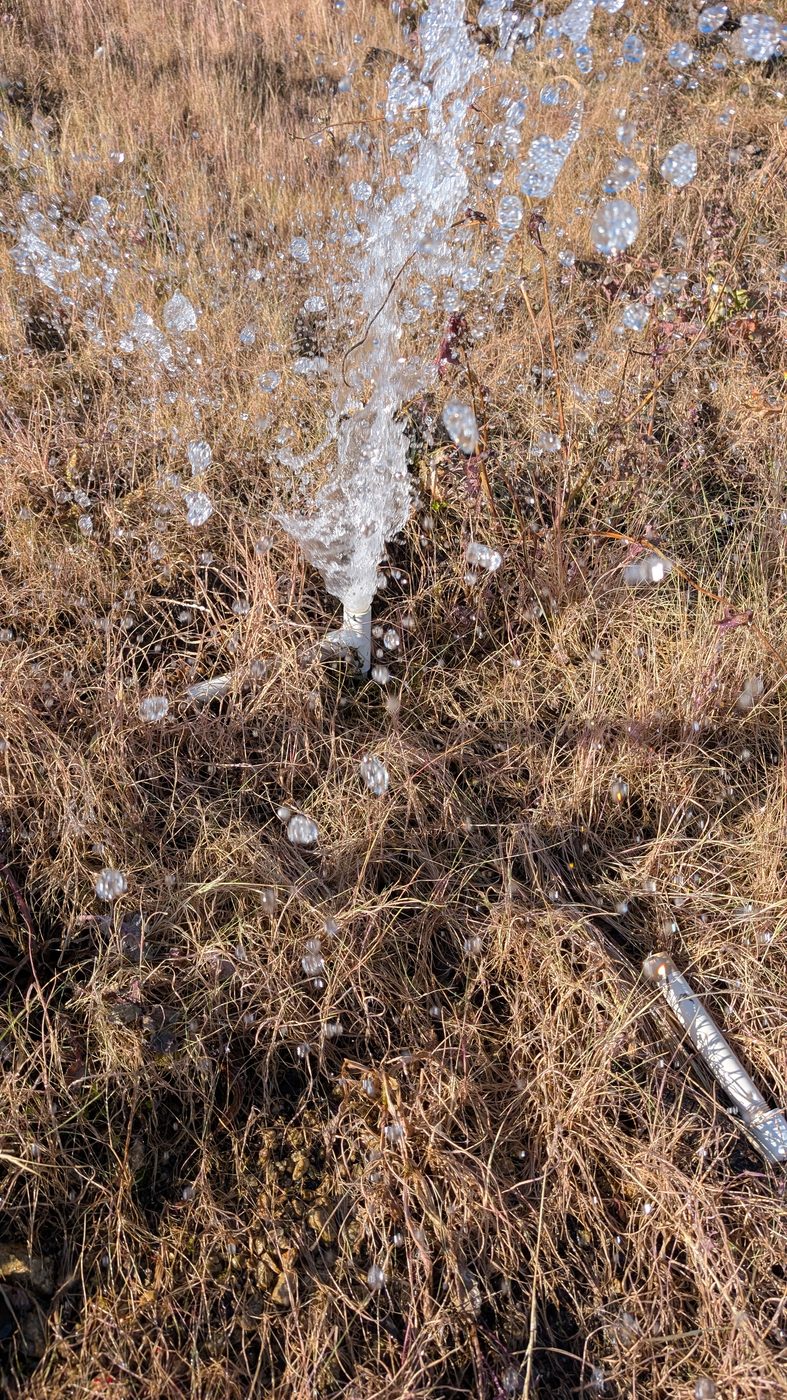
When a pipe or risers breaks, water flow increases dramatically, potentially leading to thousands of gallons of water to run off.
iFlow Technology continuously monitors irrigation flow across vineyards, orchards, and other landscapes—detecting leaks, blockages, abnormal flow, and other problems before they cause serious issues.
THE REAL COST OF AN IRRIGATION FAILURE
The real cost can include:
A REAL-WORLD EXAMPLE
iFlow detected it and automatically shut the zone down.
The problem was waiting for the irrigation manager in the morning—not continuing to waste water all night.
Consider the water, energy, fertigation, erosion, crop impact, labor, and remediation—not just the water bill.
THE HIDDEN COST
Growers and irrigation managers spend hours checking fields, blocks, rows, and properties because there is no easy way to know what is happening when they're not there.
iFlow Aware turns that uncertainty into information. When everything is working, you have a record. When something isn't, you get an alert.
iFlow Aware works alongside your existing irrigation infrastructure. Add flow sensors where you need visibility—without replacing the system that already controls irrigation.
Scheduling and controller systems can tell an irrigation system what it is supposed to do. They do not necessarily tell you whether the water is actually getting where it should. That uncertainty is why growers and water managers spend so much time walking fields, groves, and properties—sometimes every day—to make sure nothing has gone wrong.
When a pipe or risers breaks, water flow increases dramatically, potentially leading to thousands of gallons of water to run off.
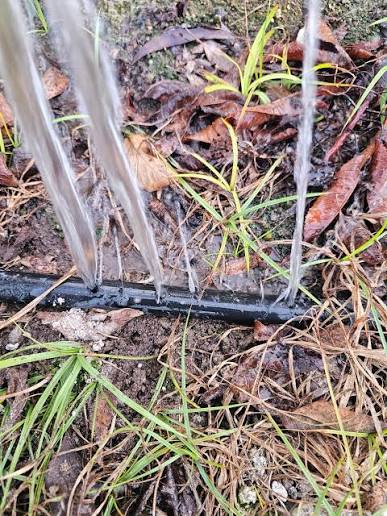
Damaged poly-tubes can go unnoticed for days or weeks, wasting water, causing erosion, and potentially leaving plants under-irrigated.

Blockages often build up over time and that is very hard to spot; but meanwhile plants get under-irrigated.
That means field walks, driving between blocks, checking valves, looking for leaks, and hoping nothing happened between visits. iFlow Aware turns that uncertainty into continuous flow visibility.
Whether you manage one vineyard block or irrigation across dozens of properties, the goal is the same: know when something is wrong without having to physically find it first.
Protect blocks and rows from broken pipes and tubes gushing out and causing significant run-off damage.
Know when a zone isn't delivering the water your trees need—and know when flow suddenly becomes abnormal.
See flow behavior by zone and focus your response where the data indicates a problem.
Monitor irrigation across multiple properties without sending someone out just to see whether everything is running.
When iFlow Aware detects flow outside the expected pattern, the most useful information is simple: what happened, where it happened, and when.
A grower or irrigation manager should be able to see the problem on a phone or desktop and know where to respond—without first driving to the property to discover what happened.
These are real flow charts from working iFlow Aware installations. The point is not another irrigation schedule—it is knowing when actual flow deviates from what you expect.
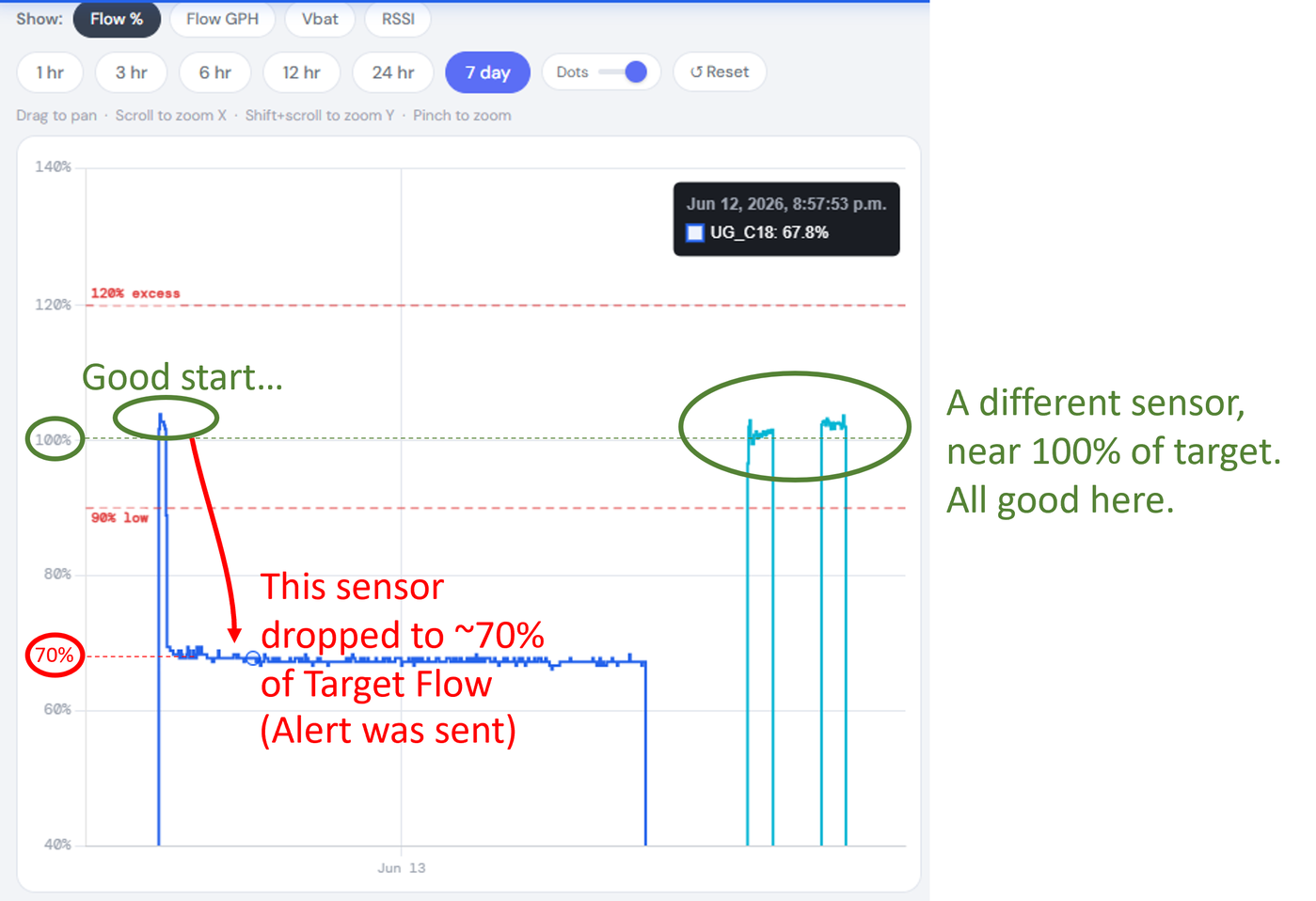
A sustained flow drop can point to a clog, blockage, stuck valve, or another restriction. The important part: the system can identify that something changed even when the problem is not obvious in the field.
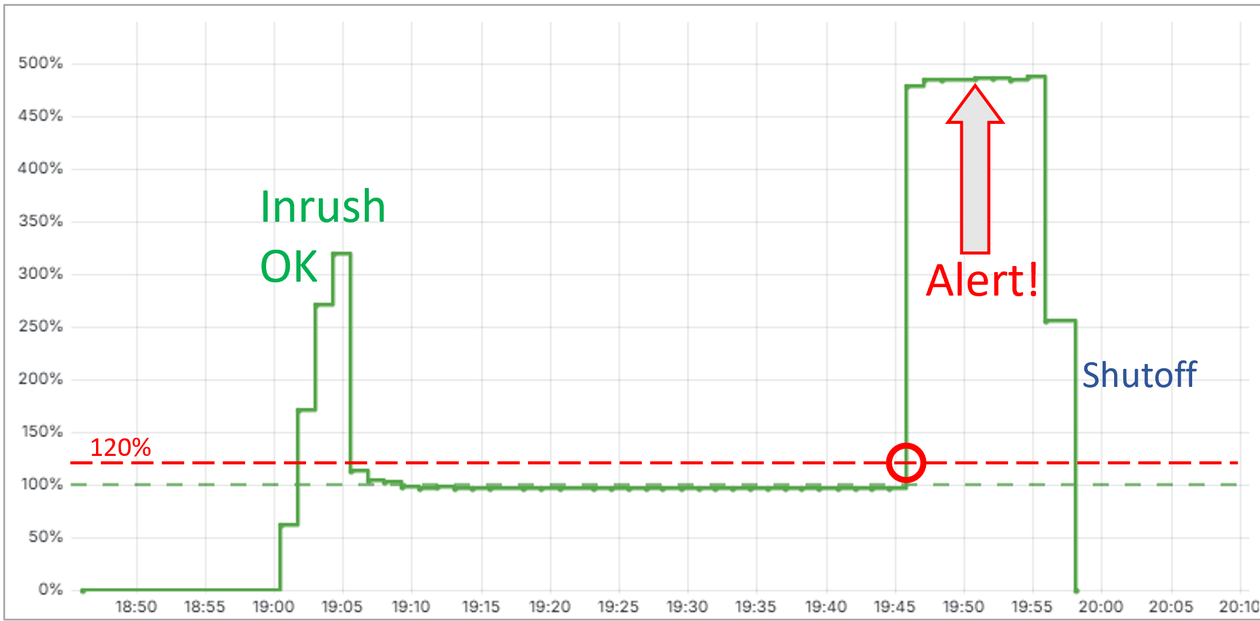
A sudden jump in flow is consistent with a blown line or other major break. In this real event, iFlow Aware alerted the manager and the configured automatic shutdown contained the leak.
 Start of Flow
 Low Flow
 High Flow
 Excess Duration
Daily, weekly, and monthly summaries can turn continuous monitoring into a useful operating record: irrigation events, measured water flow, abnormal events, and alerts over time.
Alerts tell you when something needs attention. Reports help you look back and see what actually happened across your property.
Review irrigation events, measured flow, and alerts for the day.
See patterns across zones and identify recurring problems or unusual events.
Keep a longer-term record of irrigation activity, water measured, and alerts.
In some agricultural water-quality programs, growers are required to maintain plans, monitoring information, management-practice records, and reporting documentation. iFlow Aware's historical flow data and reports may help support those records, particularly where documenting irrigation activity and efforts to prevent excessive runoff is relevant. Requirements vary by state, water district, program, and property, so iFlow reports should be treated as supporting documentation—not as a guarantee of regulatory compliance.
iFlow Aware is designed around the operational gap between “the controller says it should be running” and “we know the water is actually flowing as expected.”
Know what is happening even when nobody is walking the property.
Reduce routine trips made simply to confirm that irrigation is still working.
Get notified when flow behavior indicates a problem rather than discovering it later.
When configured, abnormal high flow can trigger automatic shutdown instead of waiting for morning.
Install sensors inline with the pipes, either near valves, at the start of a block, or better yet, near longer rows where knowing the actual flow matters. The sensors communicate wirelessly to a gateway, and the data is then processed in the cloud.
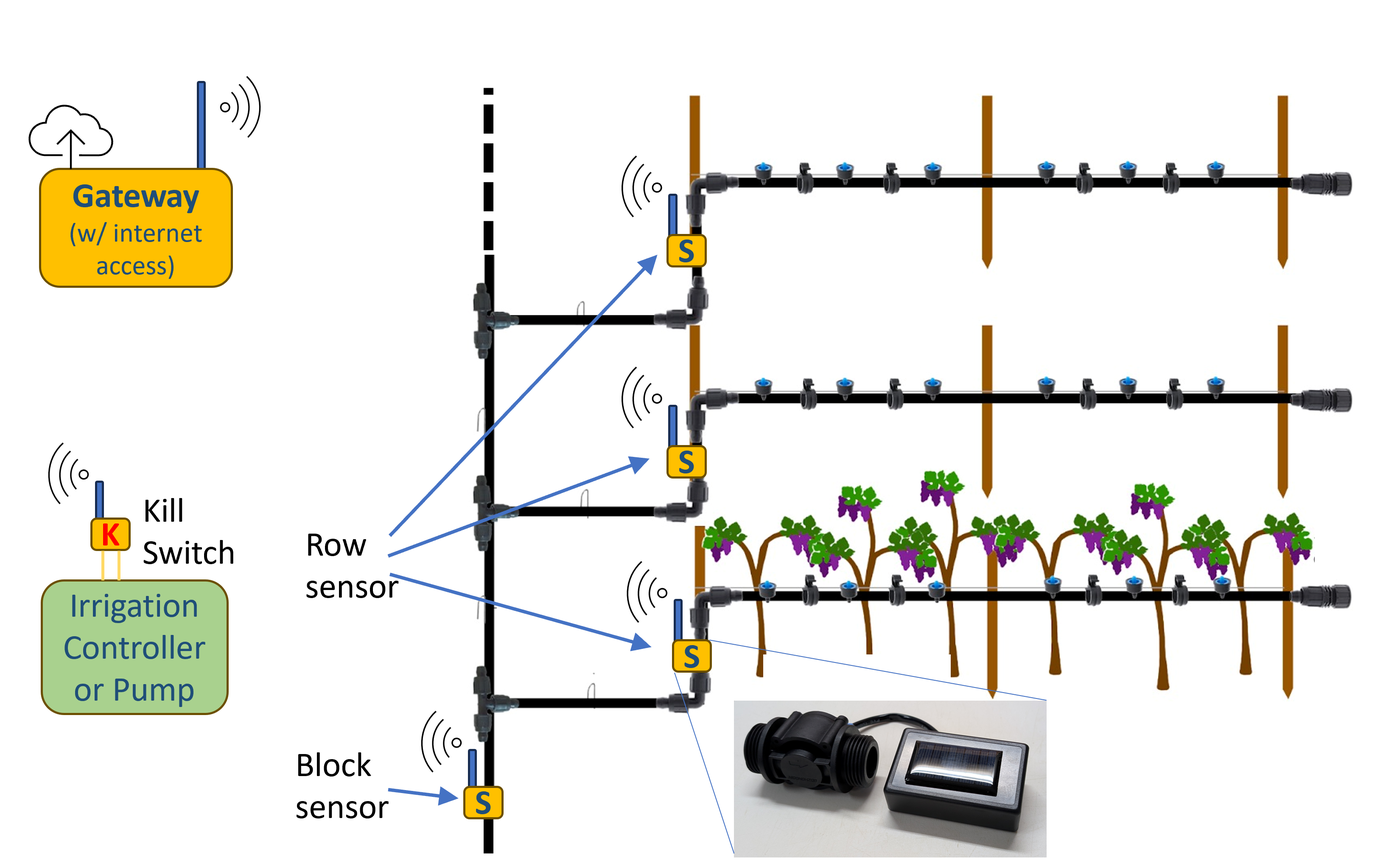
Install inline with existing pipes or tubes at a row, valve, block, or other points you want to monitor.
Solar-powered sensor modules have internal rechargeable batteries, working for you around the clock. The modules report to a gateway wirelessly. No wires required back to the irrigation controller.
Review flow history and receive alerts when behavior is outside the expected pattern. Optional automatic shutdown can be added to trigger on excess flow (broken pipe, etc) or excess time (stuck valve).
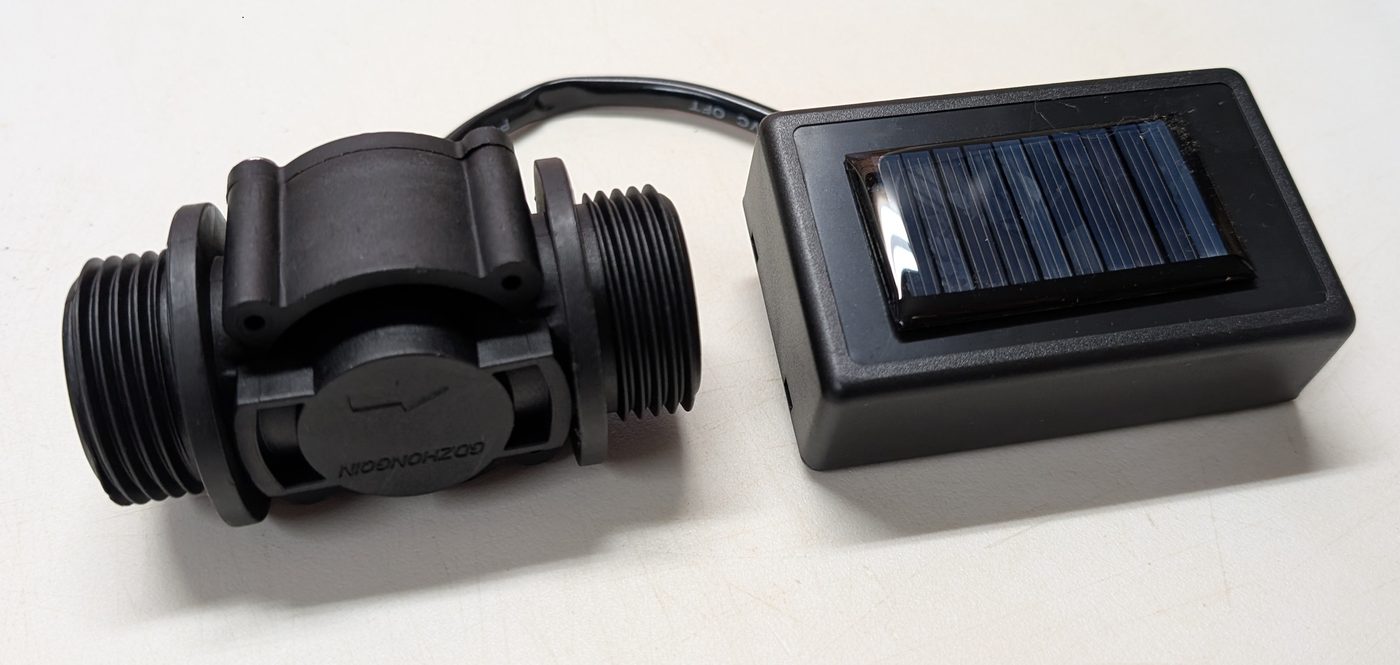
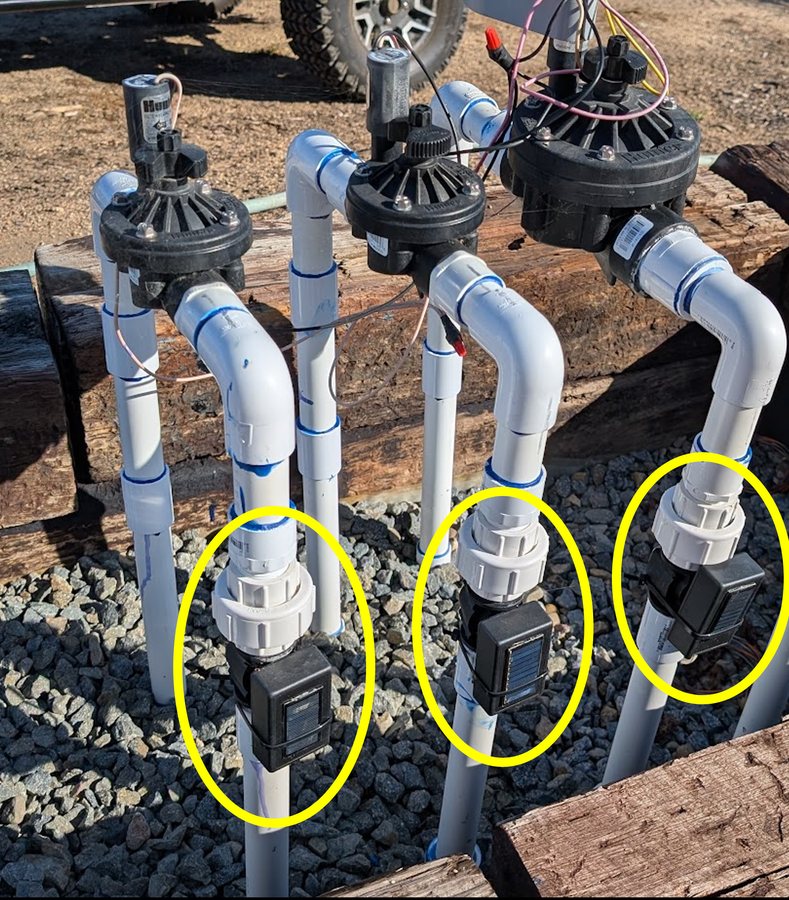
See a real installation and a real failure, from flow change to alert.
No. Your existing controller, valves, schedules, and irrigation infrastructure stay in place. iFlow Aware is a monitoring add-on to any existing irrigation system built to watch actual flow.
No. The sensors are wireless and solar-powered. They communicate with a gateway that located within about 1 mile (line of sight, can be shorter), so there is no need to run wires from each sensor back to a central location or the irrigation controller. Only the gateway needs internet access (via Ethern cable or Wi-Fi).
Yes. The sensor installs inline with the pipe feeding the zone/row, so it monitors the flow regardless of whether the zone uses drip, micro-sprinklers, or standard sprinkler heads.
You will receive an alert identifying the affected sensor, the nature of the problem, and the location where the sensor is installed. Where configured, the system can also use a "Kill-Switch" to trigger automatic shutdown upon excess flow and excess flow time.
It's not hard at all. Flow sensors install inline with the existing pipe or tube. The electronic module remains above ground, with no trenching or wiring back to the controller panel. We provide installation instructions.
Yes. A practical approach is to start with a few sensors in zones where irrigation failures or routine checking are especially costly, then expand as you see the value.
To make it easy to get started, we let you lease the system. That way you don't need to buy equipment upfront and you can experience the value of the system as you go.
Tell us about your property, irrigation layout, and the problems you most want to catch. We'll follow up with a practical starting point—sensor count, gateway considerations, and a rough cost.
 iFlow Technology